A local guide to Lapland winter clothing
Extreme cold in Lapland: what should you wear?
A cold forecast does not mean you must spend the day indoors. In Finland, children play outside and babies even nap outdoors in winter — within sensible limits. The secret is not toughness. It is dry layers, room for air and knowing when to change the plan.
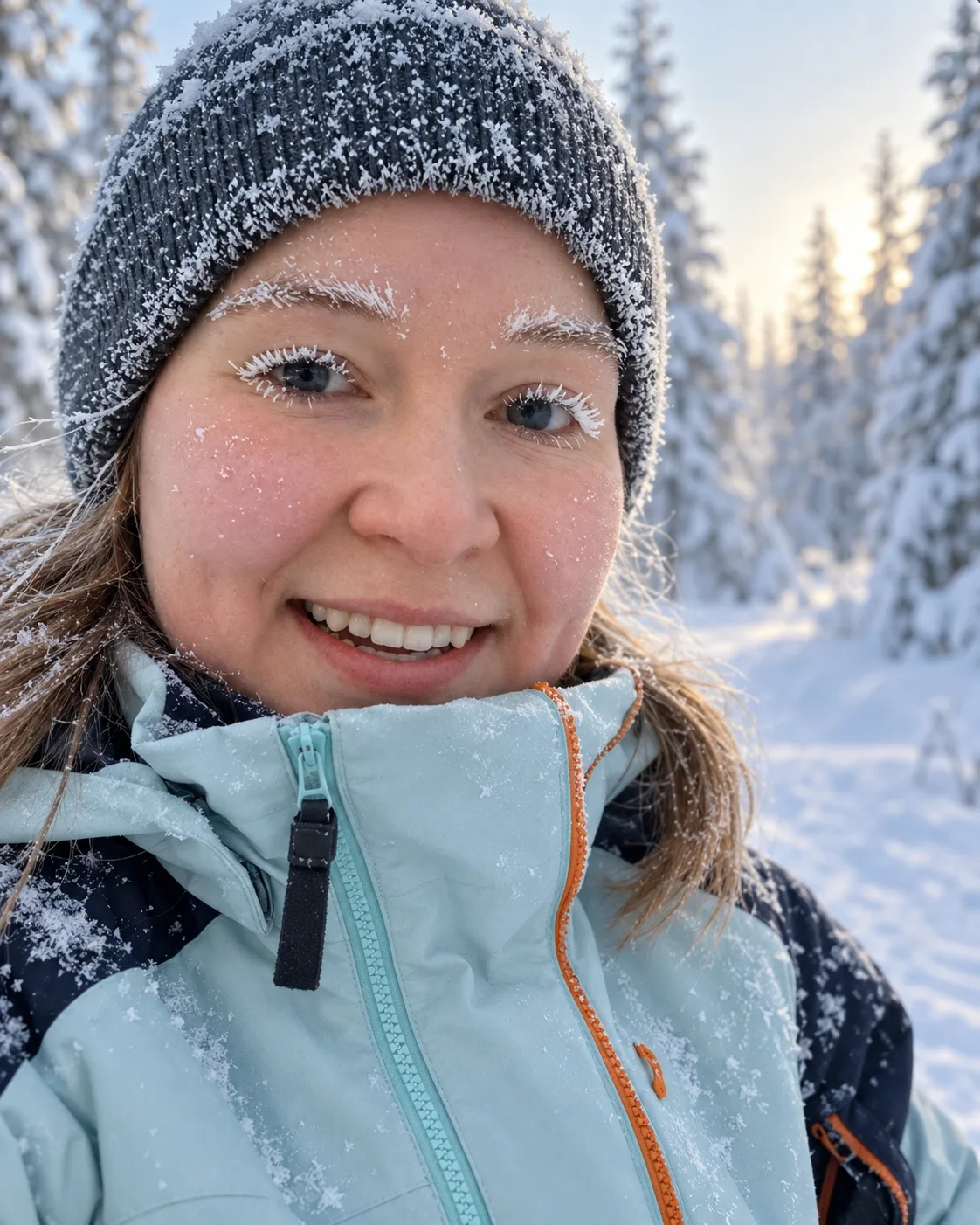
Let us begin with perspective. Around −25°C can still be a beautiful day for a walk, ski or sledging when clothing and plans match the weather. The truly severe −30 to −40°C days do happen in Lapland, but not every week. On those days we shorten outings, stay closer to shelter and save the longest adventure for another day.
There is no single outfit for every winter day. A skier produces far more heat than someone standing still under the northern lights. A sleeping baby is a completely different case from a school-age child running through snow. Temperature is only the first number: wind, moisture, time outside, age, health and activity all matter.
The most useful Finnish winter rule is simple: dress so that dry air remains between the layers. Tight boots, compressed socks and a jacket stretched over too many clothes lose exactly the air that should keep you warm.
How cold is extreme cold in Lapland?
For travel planning, think of temperatures below about −25°C as conditions that need extra care. They can still be suitable for outdoor activities, but wind and time spent still make a large difference.
At −25°C, a well-dressed adult or active older child can often enjoy being outdoors. Keep the route shorter, include warm breaks and check fingers, toes and cheeks often. Aurora watching, ice fishing and other stationary activities require more insulation than skiing or walking.
When the forecast drops towards −30 or −40°C, flexibility matters more than completing the original plan. Choose a short outing near a warm place, avoid exposed windy areas and follow local weather warnings. Cold is manageable; refusing to adapt is not.
Do Finnish babies really sleep outdoors in winter?
Yes, outdoor pram naps are common in Finland, but not in unlimited cold. Several Finnish health-care guides use about −10°C as the limit for a small baby; some give a range of −10 to −15°C depending on wind and conditions.
Families begin gradually, keep the pram sheltered from wind and check the baby's warmth at the back of the neck rather than judging by cool hands. Age, health, prematurity, wind and the family's own child-health-clinic advice can change the limit. A baby should never be left where the caregiver cannot monitor them.
An outdoor nap is not proof that a baby can be dressed like an adult for extreme cold. The baby is still, closely wrapped and supervised in a protected pram. An active child needs clothes that breathe, allow movement and can be adjusted before sweat makes the layers wet.
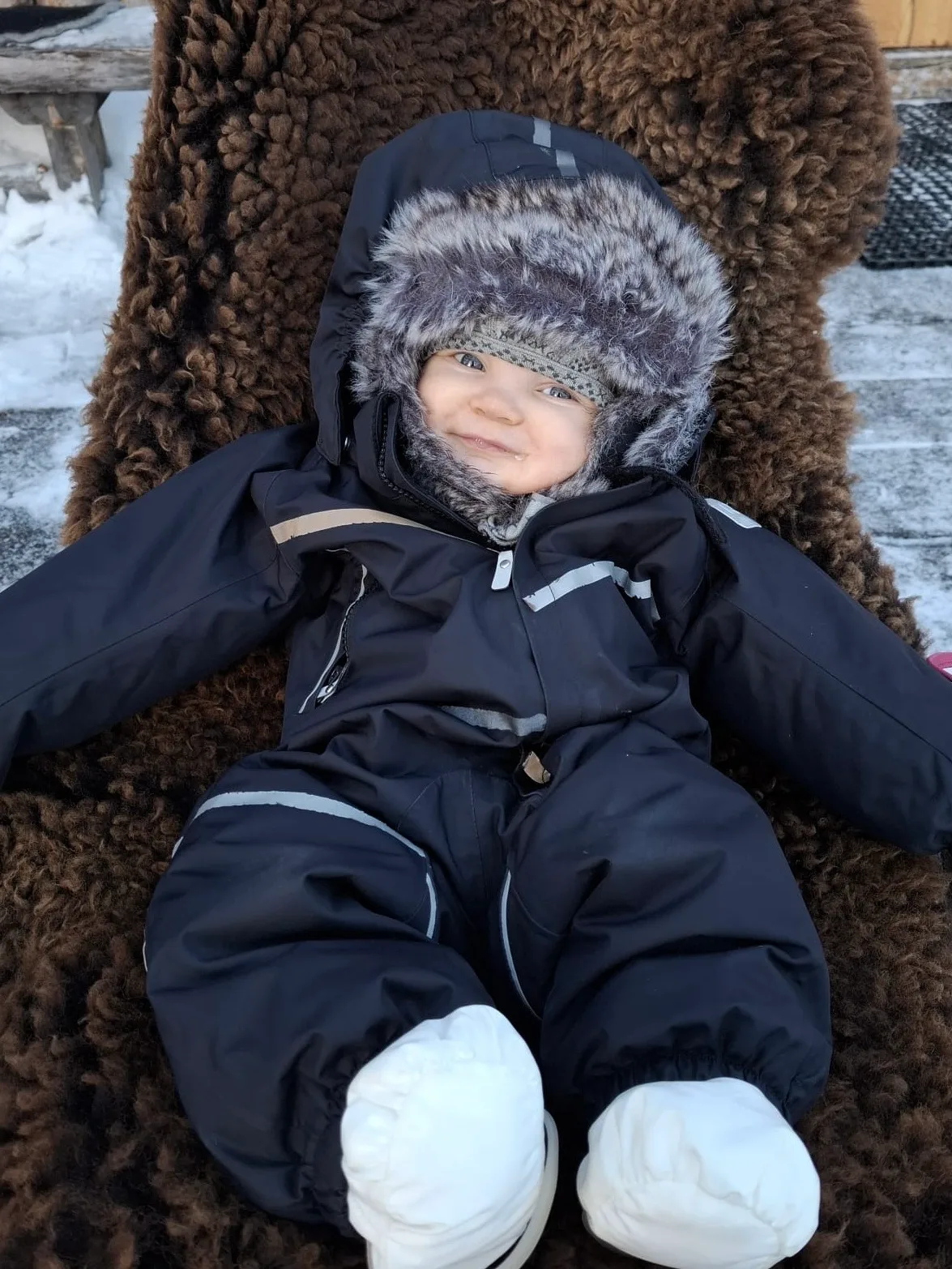
For a baby, follow your own maternity and child-health clinic's guidance. This article is a clothing guide for travellers, not an individual medical recommendation.
How should a child dress for very cold weather?
Dress an active child in adjustable layers that stay dry and leave room to move. The child should feel comfortably warm, not packed so tightly that insulation and circulation suffer.
For an active child
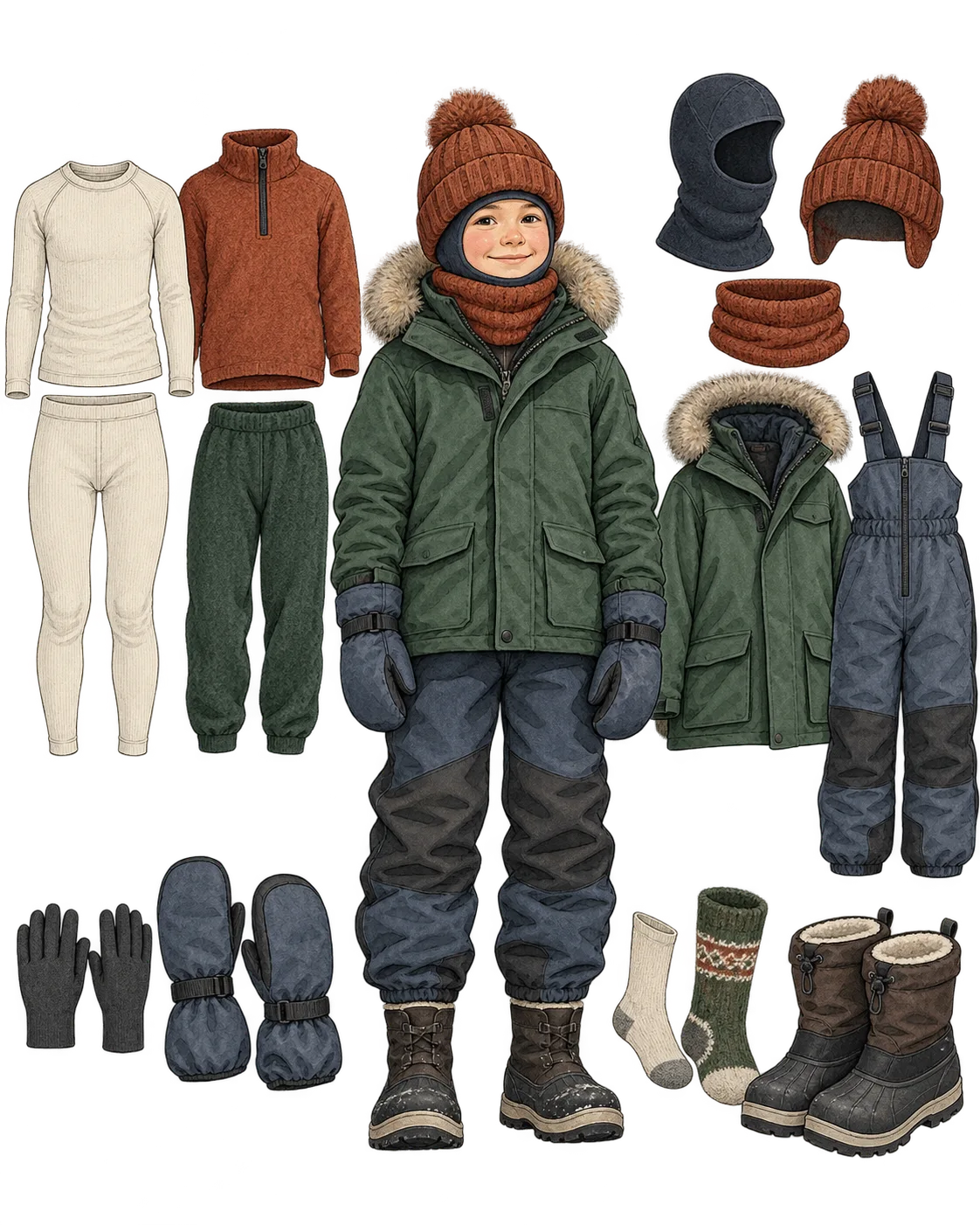
- Base layer: merino wool or a technical moisture-moving top and leggings next to the skin. Avoid cotton for a long cold outing because it holds moisture and dries slowly.
- Mid-layer: wool, wool fleece or airy fleece. Add a second insulating layer when it is colder or the child will be moving less.
- Outer layer: a properly insulated winter suit, or an insulated jacket and high-waisted trousers, with wind protection and room underneath.
- Head and face: a balaclava or hood, a warm hat covering the ears and a neck warmer. Check cheeks regularly; children may not notice a pale numb patch themselves.
- Hands: thin liner gloves under roomy mittens. Mittens are usually warmer than finger gloves. Carry a dry spare pair.
- Feet: a thin moisture-moving liner sock and a warm wool sock in roomy insulated boots. Add another wool layer only if the toes can still move freely.
Movement makes heat, so let children walk, play and pull the sled rather than stand still for long. But more is not always better: if the child begins to sweat, slow down or remove a layer. Plan warm breaks before anyone becomes cold, and change damp clothes immediately.
How should an adult dress for −20 to −40°C?
Start with three functions: move moisture away from the skin, trap dry air and stop wind. In stronger frost, one insulating layer becomes two — or even three when you are standing still.
- Base layer: merino wool or a technical synthetic set. It should fit close enough to move moisture but never restrict circulation.
- Insulation: one to three airy layers of wool, fleece or other loft, chosen for the temperature and pace.
- Outer layer: an insulated, wind-resistant jacket and warm trousers. Add a windproof shell when the outer insulation does not block wind sufficiently.
- Break layer: pack a roomy down or synthetic insulated parka to pull over everything when stopping at a campfire or waiting for the northern lights.
- Hands, head and face: liner gloves, roomy mittens, a hat over the ears, neck warmer and balaclava when the wind or frost calls for it.
- Feet: insulated boots, liner socks and warm wool socks with space left around the toes. Carry dry spare socks and gloves close to the body or in a dry bag.
If your fingers keep getting cold, do not only add thicker gloves. Add warmth to your torso too. The body protects its core first, and a warm vest or extra mid-layer can make a surprising difference to hands and feet.
The boot trick: warmth needs empty space
Winter boots are often one or two sizes larger than summer footwear, but the correct fit matters more than the number on the box. Toes must move and socks must stay fluffy rather than compressed.
A good system is a thin moisture-moving liner sock plus one warm wool sock. A thin wool sock and a thicker wool sock can also work in severe cold, provided the boot remains roomy. Three excellent socks squeezed into a tight boot are colder than two dry socks with air around them.
Check the insole and sole too. Heat escapes from your feet into the cold ground, and an insulating insole plus a thick sole can matter as much as the boot's upper. Dry boots and insoles fully between outings.
Wool, polyester, down or synthetic fill?
Read the material label, but also look at the garment's structure and job. Warmth comes mainly from dry air trapped by the fabric or fill — not from a fibre name alone.
Wool
Wool feels warm, manages moisture and continues to insulate when slightly damp. Fine merino is soft next to the skin; loftier traditional wool is excellent as a mid-layer. Wool blends can add strength and faster drying.
Polyester and other synthetics
Polyester is a plastic-based fibre, but it is not automatically cold. A technical base layer can move sweat well, and fleece is often warm polyester because its airy structure traps heat. A thin smooth fashion lining is a different garment entirely.
Down
Real down offers exceptional warmth for its weight when kept dry. It is ideal for a roomy break parka and dry, cold conditions, but it loses loft when wet and needs careful drying.
Synthetic insulation
Synthetic fill is not down, and quality varies. It is usually heavier for the same warmth, but often handles damp conditions and repeated washing better. Choose by use, construction and fit rather than the word 'padding' alone.
Wind, sweat and frostbite: what should you watch for?
Wind removes heat from exposed skin faster, while sweat makes clothing lose warmth. Frostbite is a real risk on cheeks, ears, nose, fingers and toes — and it may begin without pain.
- Check faces often. A pale or white, numb or hardened patch is a warning sign: go indoors and warm it gently.
- Never rub a frostbitten area with snow or massage it. Protect it from refreezing and seek medical advice if normal colour and feeling do not return or if blisters appear.
- Change sweaty or wet base layers, socks and gloves for dry ones. A spare layer is useful only if it has stayed dry in the bag.
- Use windproof face protection when needed, but make sure breath does not soak the fabric against the skin. Swap a damp face covering for a dry one.
- Stop early if someone becomes unusually quiet, clumsy, confused or very tired. Go to warmth; do not treat finishing the route as the goal.
Should you put cream on your face before going out?
Do not apply a water-based emulsion, so-called frost cream or other face cream immediately before going into severe cold. Cream is not insulation and must never replace physical protection.
Finnish medical guidance advises against creams just before cold exposure. If dry skin needs care, use a suitable rich or water-free ointment well in advance — the previous evening is practical — and let it absorb properly. For a child's sensitive or treated skin, follow the product instructions and ask a health professional or pharmacist when needed.
The most reliable protection for cheeks is still sensible time outdoors, shelter from wind, a dry balaclava or face covering and regular visual checks.
Five rules worth remembering
- 1Keep the base layer dry and change wet clothes immediately.
- 2Leave room for insulating air — especially in boots and mittens.
- 3Dress for the activity: standing still needs much more warmth than skiing.
- 4Protect the head, face, hands and feet, and check children's cheeks often.
- 5Let the weather change the plan. A shorter outing can still be the best outing of the day.
Quick answers about dressing for Lapland cold
Can I go outside at −25°C in Lapland?
Often yes, if you are healthy, properly dressed and adapt the length and intensity of the outing. Wind, exposed skin and standing still increase the risk, so choose a shorter route near warmth and check yourself and children frequently.
How many layers do I need at −30°C?
There is no universal number. A common starting point is a moisture-moving base, one to three airy insulating layers and an insulated wind-resistant outer layer. Add a roomy break parka for stops, then adjust before you sweat.
Should winter boots be two sizes bigger?
Often one or two sizes larger than summer shoes works, but fit is the real rule. With your intended socks on, toes must move freely and neither socks nor insulation should be compressed.
Is wool always warmer than polyester?
Not automatically. Wool is excellent in cold weather, but a technical polyester base can move moisture well and polyester fleece can be very warm. Dryness, loft, construction and fit decide how the full clothing system performs.
At what temperature can a baby sleep outdoors in Finland?
Several Finnish health-care guides use about −10°C as the limit for a small baby, while some give −10 to −15°C depending on wind and conditions. Follow your own child-health clinic's advice and consider the baby's age and health.
What are the first signs of frostbite?
A pale or white, numb or hardened patch of skin is a warning sign, especially on cheeks, ears, nose, fingers and toes. Move to warmth, warm gently without rubbing and seek medical advice if colour and feeling do not return or blisters develop.
Health and outdoor-safety sources
- Ostrobothnia wellbeing services: basic baby care and winter outdoor naps
- City of Helsinki: basic care of a baby
- Terveyskirjasto: frostbite in children
- Terveyskirjasto: frostbite, prevention and first aid
- Finnish Institute of Occupational Health: dressing for cold weather
- Metsähallitus: materials and clothing for outdoor activities
Did this piece spark a thought? Share yours!
Comments
No comments yet — be the first.