Deep winter in Finnish Lapland
Kaamos in Lapland: the polar night is not complete darkness
Kaamos is the season when the sun stays below the horizon — but Lapland does not disappear into blackness. January brings blue snow, a rose-coloured sky and a light so soft that even familiar forests look otherworldly.
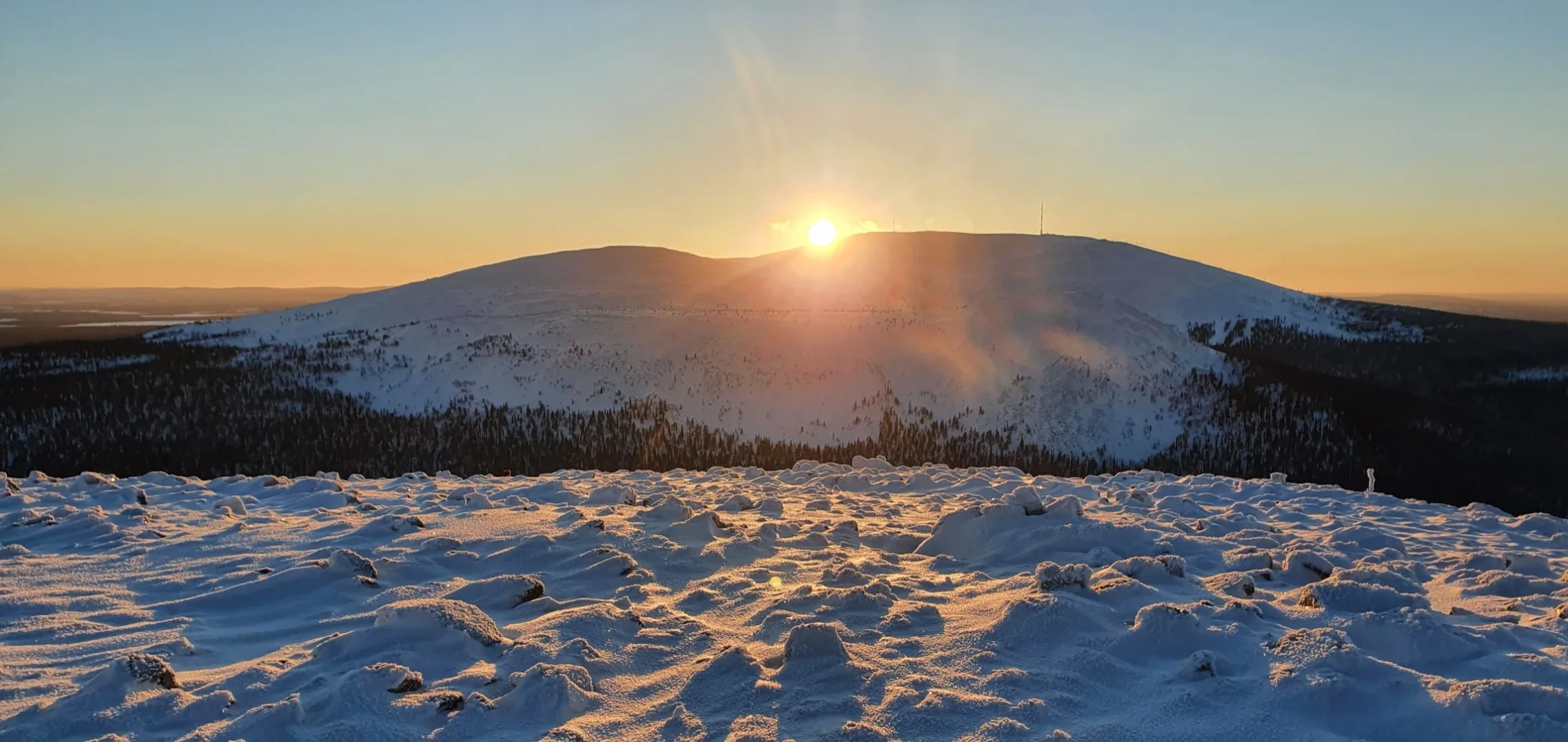
People sometimes ask how we cope when the sun does not rise. The question makes kaamos sound like a lid closing over Lapland. It is not like that. There is darkness, of course, but there are also several hours of twilight around midday, and snow catches every trace of light. On a clear day the horizon may glow peach, pink and gold while the forest remains blue.
This is one of Lapland's eight seasons: the quiet heart of winter. Around Levi, Ylläs and Muonio, kaamos changes the rhythm of a day. You go outside when the light is at its best, stop to notice how snow creaks under your boots and return with red cheeks when the first stars appear.
And sometimes the season surprises even us. From high on Kesänki, I have seen the edge of the sun glint beyond Yllästunturi at a time when, on paper, it should not rise. Height changes the visible horizon, and the atmosphere lifts the sun's apparent position slightly. Kaamos keeps its rules — the landscape simply lets you see them from another angle.
What does kaamos mean in Lapland?
Kaamos is the polar-night period when the sun does not rise above the horizon. Its length depends on latitude, and it does not mean 24 hours of complete darkness.
The Finnish Meteorological Institute explains that twilight remains when the sun is only a little below the horizon. In midwinter, Lapland can have a few hours of twilight around noon even where the sun itself does not appear. The further north you travel, the longer the polar night lasts.
The dates on a sunrise calendar are also not the whole story. Sunrise is defined using the upper edge of the sun and includes atmospheric refraction, which makes the sun appear slightly higher than its geometric position. Hills, valleys and your own elevation change the horizon you can actually see.
Is Lapland dark all day during kaamos?
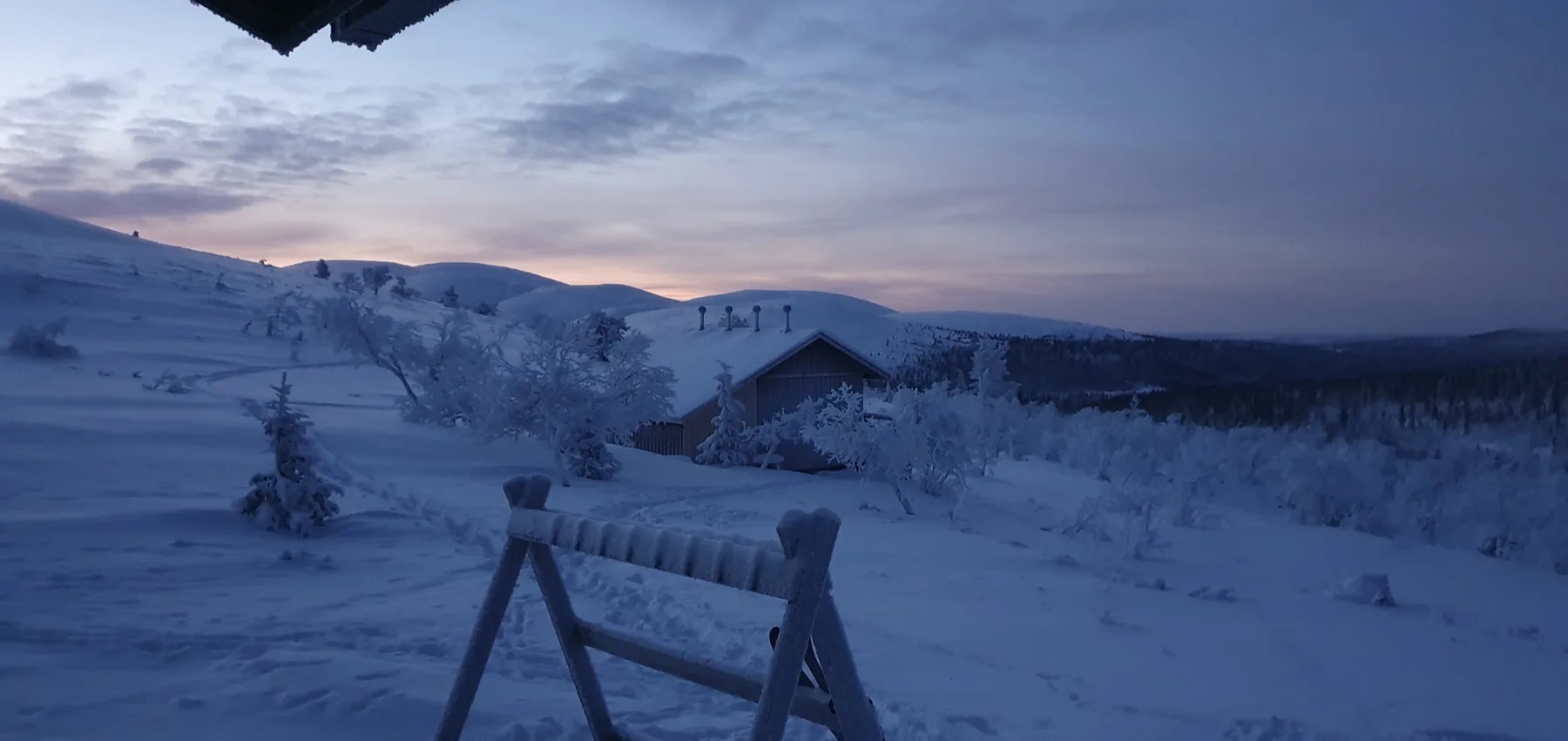
No. The darkest hours are long, but around midday the sky brightens into a prolonged blue hour. Clear weather, fresh snow, moonlight and cloud cover all change how light or dark the same day feels.
Kaamos light is difficult to photograph and even harder to describe. The snow may look deep blue while the southern horizon is lavender and pink. On an overcast day, the world becomes softer and quieter. Under a full moon, the snow can be bright enough to cast shadows.
My favourite part is that the light never becomes ordinary. It stays low, skims the snow and then begins to fade. You pay attention because there is no endless afternoon to waste.
What can you do in Lapland during kaamos?
Go outside. Kaamos is not a reason to wait indoors for spring: it is a beautiful time for skiing, snowshoeing, winter walking and simply being in the forest.
- Use the brightest hours around midday for a longer outing and take a headlamp even if you expect to return before dark.
- Choose a maintained winter trail or ski track that suits the weather, snow conditions and your experience.
- Stop at a public lean-to or campfire site for something warm; many are free to use, but check local rules and current fire guidance.
- Listen for the dry creak of snow on a cold day and notice how the forest changes from blue to pink and back again.
- On a clear evening, step outside more than once. The long darkness gives you time to wait for stars, moonlight and perhaps northern lights.
- Return rosy-cheeked for a sauna, woollen socks, a fire and a mug of hot tea or cocoa.
Nammalakuru is a demanding wilderness destination, especially in winter. The hut is not a shortcut around planning: check official route information, weather and your own skills, and carry the equipment needed to manage without the hut.
Can you see the northern lights during kaamos?
Yes. Kaamos gives you many dark hours for aurora watching, but northern lights still require suitable space weather and a sufficiently clear sky. They can never be guaranteed.
The Finnish Meteorological Institute estimates that in Central Lapland — including Ylläs and Levi — auroras occur on roughly three to four nights a week when the sky is both dark and clear. Clouds can hide them completely, even when activity is strong above them.
Do not spend the whole evening refreshing an app. Look outside. If stars are visible, step away from the brightest yard lights and give your eyes a moment to adjust. Even a faint arc can grow while you are standing there.
What should you wear in Lapland during kaamos?
January in Lapland can bring anything from temperatures close to 0°C to an occasional spell near −40°C. Most days fall somewhere between those extremes, so check the forecast and dress in adjustable layers for both the temperature and what you plan to do.
- A wool or technical base layer that moves moisture away from the skin
- One to three insulating mid-layers, such as wool or fleece, depending on the temperature and activity
- A properly insulated, windproof winter jacket and warm, wind-resistant trousers
- Roomy insulated winter boots with space for dry wool socks — tight footwear makes feet colder
- Warm mittens, preferably with thin liner gloves underneath, plus a dry spare pair for longer outings
- A warm hat, neck warmer and face protection when the frost or wind calls for it
- A roomy insulated parka or other warm break layer for campfire stops and standing still to watch the sky
- A headlamp, reflectors and spare power kept close to the body
- A thermos with a warm drink
- Extra dry base and mid-layers for longer outings
Around −25°C can still be wonderful outdoor weather when you dress well, keep moving and adjust the length of the outing. Standing still for auroras or a campfire needs more insulation than skiing. The coldest −30 to −40°C days are occasional: shorten or change the plan then, stay closer to shelter and follow local weather warnings.
Where should you stay for a kaamos holiday?
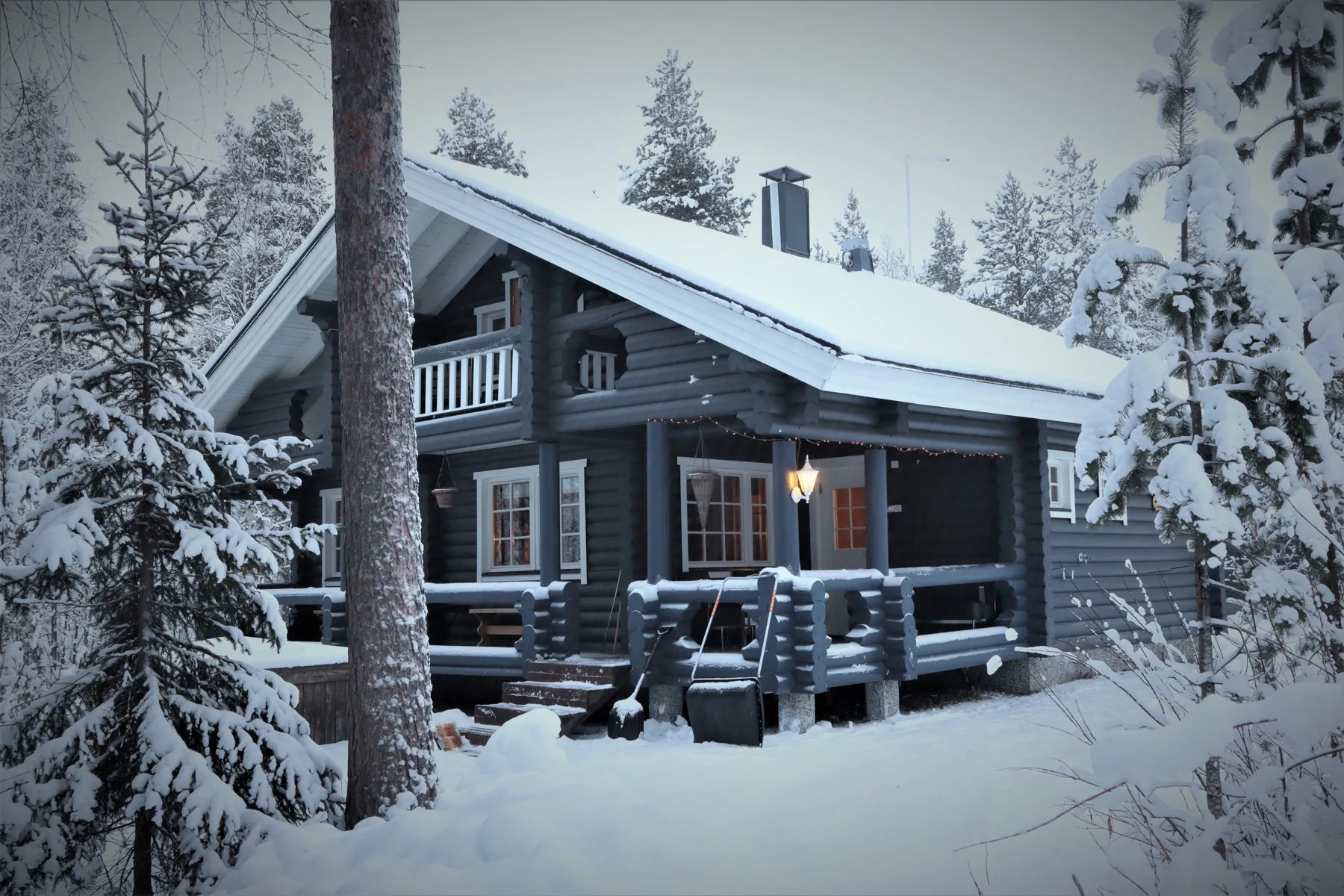
Choose a cabin that makes both sides of kaamos easy: quick access to the outdoors and a genuinely warm place to return to. Pesää Vailla has cabins in Levi, Ylläs and Muonio.
- Wildpaw Hideaway (Otsonpesä) — Levi — A spacious round-log cabin near Levi's services, with a fireplace, sauna and outdoor hot tub.
- Frostwing Hideaway (Riekonpesä) — Ylläsjärvi — A comfortable base near Ylläs for snowy forests, winter trails and quiet evenings by the fire.
- Snowtail Hideaway (Naalinpesä) — Äkäslompolo — A warm, roomy cabin with a sauna and outdoor jacuzzi, close to the village and Ylläs landscapes.
- Metsonpesä — Muonio — An off-grid wilderness cabin for experienced guests who want wood heat, deep quiet and a darker sky.
Quick answers about kaamos in Lapland
Is kaamos completely dark?
No. The sun remains below the horizon, but there are hours of twilight around midday. Snow, cloud cover and moonlight strongly affect how bright the landscape feels.
When is kaamos in Levi and Ylläs?
Kaamos belongs to the weeks around the winter solstice, but its exact duration changes with latitude, elevation and the visible horizon. Check destination-specific sunrise and twilight times for your travel dates.
Can the sun be visible during kaamos?
From higher ground, the visible horizon can differ from the horizon used in general sunrise tables. Atmospheric refraction also makes the sun appear slightly higher, so a bright edge or a brief glimpse may sometimes be visible from a fell.
Can I see northern lights during kaamos?
Yes. Long dark hours are excellent for watching, but you still need a sufficiently clear sky and suitable aurora activity. No sighting can be guaranteed.
Is January a good time to visit Finnish Lapland?
Yes, if you want deep winter, soft blue light, snowy outdoor activities and quiet evenings. Be prepared for cold, short natural-light hours and changing conditions.
Sources and useful live information
- Finnish Meteorological Institute: the sun, twilight and polar night
- Finnish Meteorological Institute: tips for seeing the northern lights
- Finnish Meteorological Institute: severe frost and Finland's coldest winters
- Metsähallitus: clothing and preparation for a winter outing
- Metsähallitus: Nammalakuru wilderness and shared rental hut
- Metsähallitus: winter conditions on the Hetta–Pallas ski trail
Did this piece spark a thought? Share yours!
Comments
No comments yet — be the first.