One of Lapland's eight seasons
Midwinter in Lapland: the sun returns to deep snow
After the polar night, the change feels almost sudden. The sun seems to shine every day, daylight stretches a little further and the deep snow catches colours we have not seen for weeks.
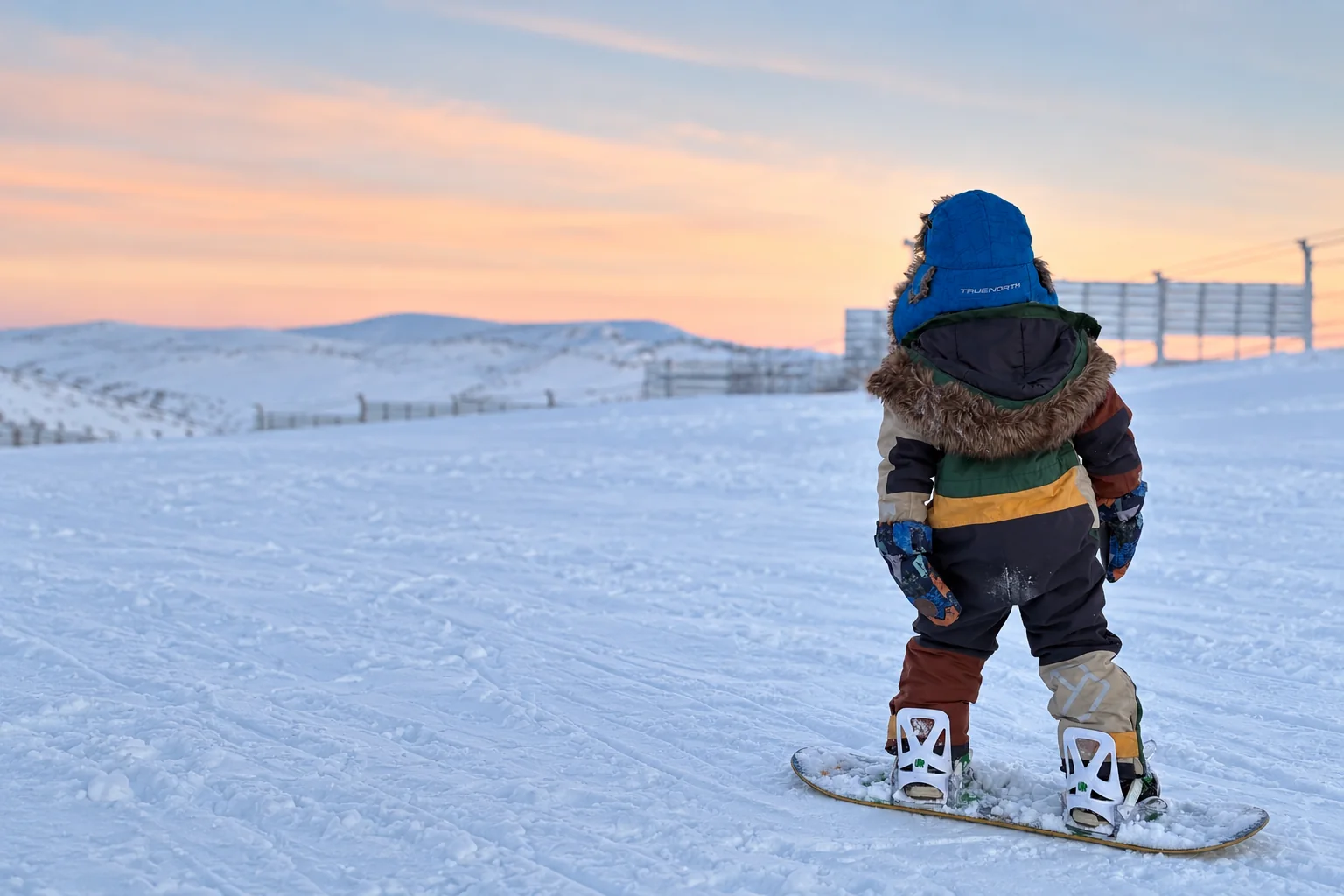
Kaamos does not end with a switch being flicked. Still, that is almost how it feels. One day you notice a narrow strip of sunlight on the fell; soon it seems to appear every clear day. The shadows are long, the sky turns pink and peach, and suddenly there is enough light to plan the afternoon outside.
This is sydäntalvi — literally the heart of winter. It is often properly cold. Snow creaks under boots, tree trunks crack in the frost and your breath hangs in the air. Yet this is not a season for waiting indoors. It is a season for ski tracks, slopes, snowboards, snow play and small warm breaks in between.
The evenings are still dark enough for magnificent northern lights. A clear midwinter day can therefore begin with pale sunlight on snowy trees and end with green light moving over the same landscape.
What is midwinter in Lapland?
Midwinter is the cold, snowy period after the polar night and before the brighter spring-winter. Around Levi, Ylläs and Muonio, it belongs roughly to the second half of January and February, although nature never follows exact calendar dates.
Lapland's eight-season calendar is not identical everywhere. Some call this pakkastalvi, the season of hard frost; here sydäntalvi — the heart of winter — describes it beautifully. The sun has returned, but the landscape is still in its deepest winter state.
The coldest part of the Finnish winter typically falls around late January. That does not mean every day is severely cold. Temperatures can vary greatly, and a calm clear day feels very different from the same reading in wind.
What happens to daylight after kaamos?
Daylight increases quickly after the winter solstice. By midwinter, the returning sun is visible again and every week brings noticeably longer afternoons.
The light stays low and soft. It does not yet climb high into the sky, so it reaches through the forest horizontally and draws blue shadows across the snow. Pink clouds, pale gold at the horizon and snow that sparkles like tiny glass crystals can all belong to the same hour.
This is my favourite part of the change: after weeks of blue twilight, the sun suddenly seems to be everywhere. You begin to notice which cabin window catches the first rays and where on the trail the light lingers longest.
Is midwinter the snowiest season in Lapland?
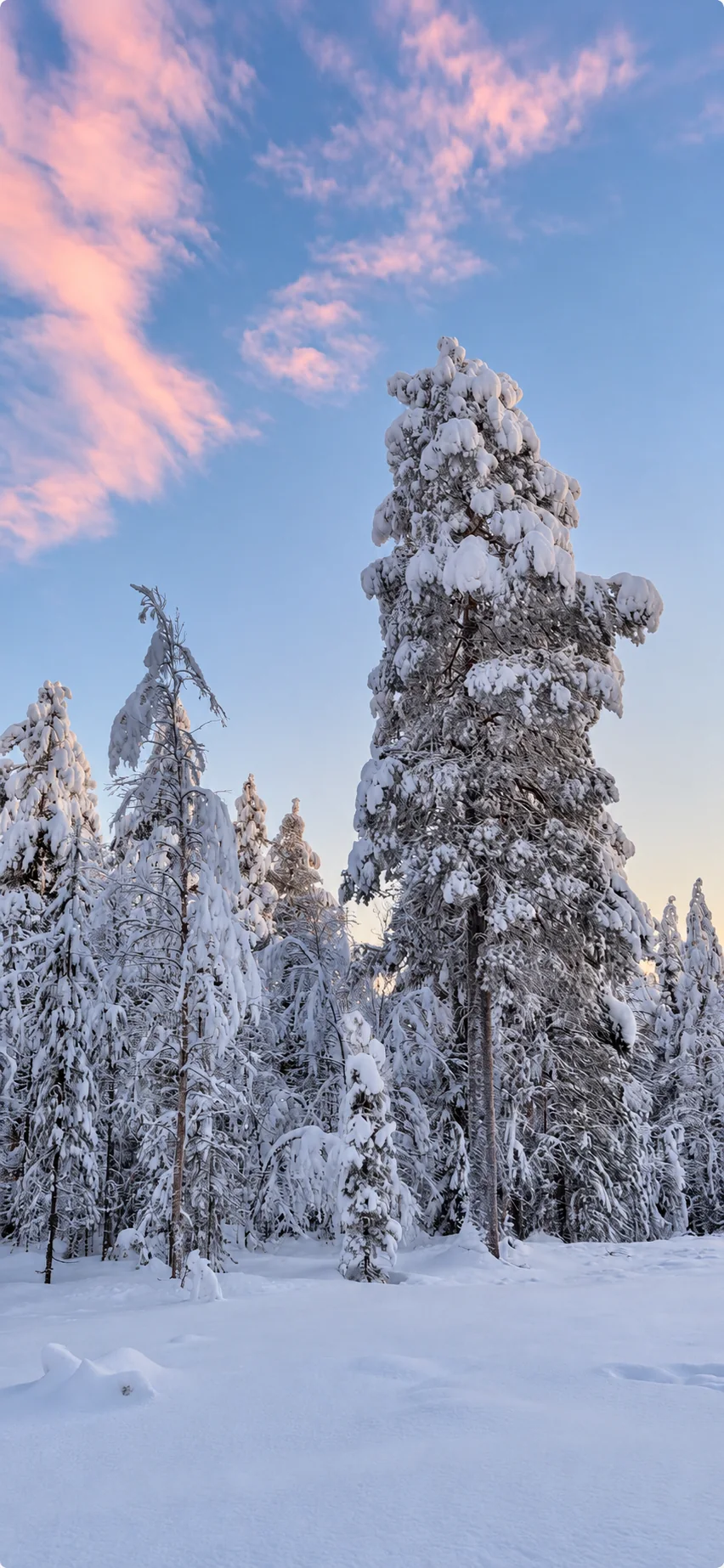
Midwinter already brings deep snow, high drifts and heavily snow-loaded trees. Statistically, however, the season's greatest measured snow depth in Lapland is usually reached later — around mid-March or even early April.
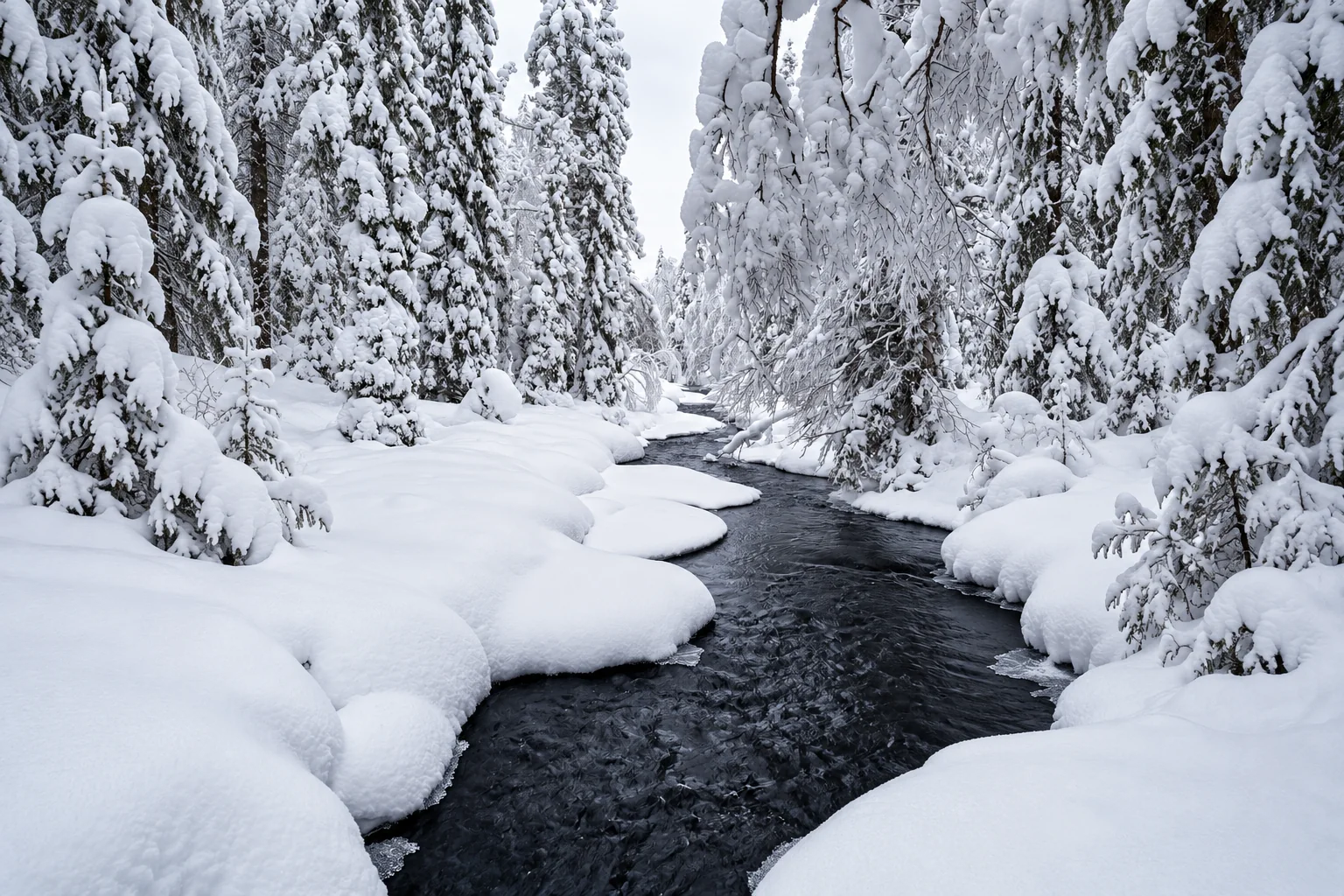
The feeling of enormous snow is still completely real. By January and February, months of snowfall have softened stones, buried small trees and raised the forest floor. Wind gathers loose snow into banks that can be far deeper than an official measurement from a level observation site.
Snow also settles under its own weight, so depth does not tell the whole story. New snow keeps falling while older layers compact beneath it. Later, stronger spring sunshine begins changing the surface, but the full melt is still a long way away in Fell Lapland.
Tykkylumi is one of the most beautiful sights of the season: snow and frost cling to branches until familiar spruces become heavy white sculptures. Look up, but give heavily loaded trees and bent branches space, especially in wind or milder weather.
What can you do in Lapland during midwinter?
Go outside. Cold weather changes the pace and clothing, but it does not automatically cancel the day. Cross-country ski tracks and downhill slopes are two of the best ways to enjoy the returning light.
- Ski on maintained cross-country tracks and choose the distance according to the temperature, wind and your experience.
- Go downhill skiing or snowboarding. The low sun and pastel sky can turn even a familiar slope into something extraordinary.
- Take a short forest walk or snowshoe outing to see snow-loaded trees away from the busiest routes.
- Stop at a public lean-to or campfire site for a warm drink, checking current local rules and fire guidance first.
- On a clear evening, look outside more than once. Midwinter still offers long dark hours for northern lights.
Check the live trail and slope information before setting out. Track maintenance, lift operations and outdoor conditions can change with weather and snowfall.
The best midwinter activity with children? Play in the snow
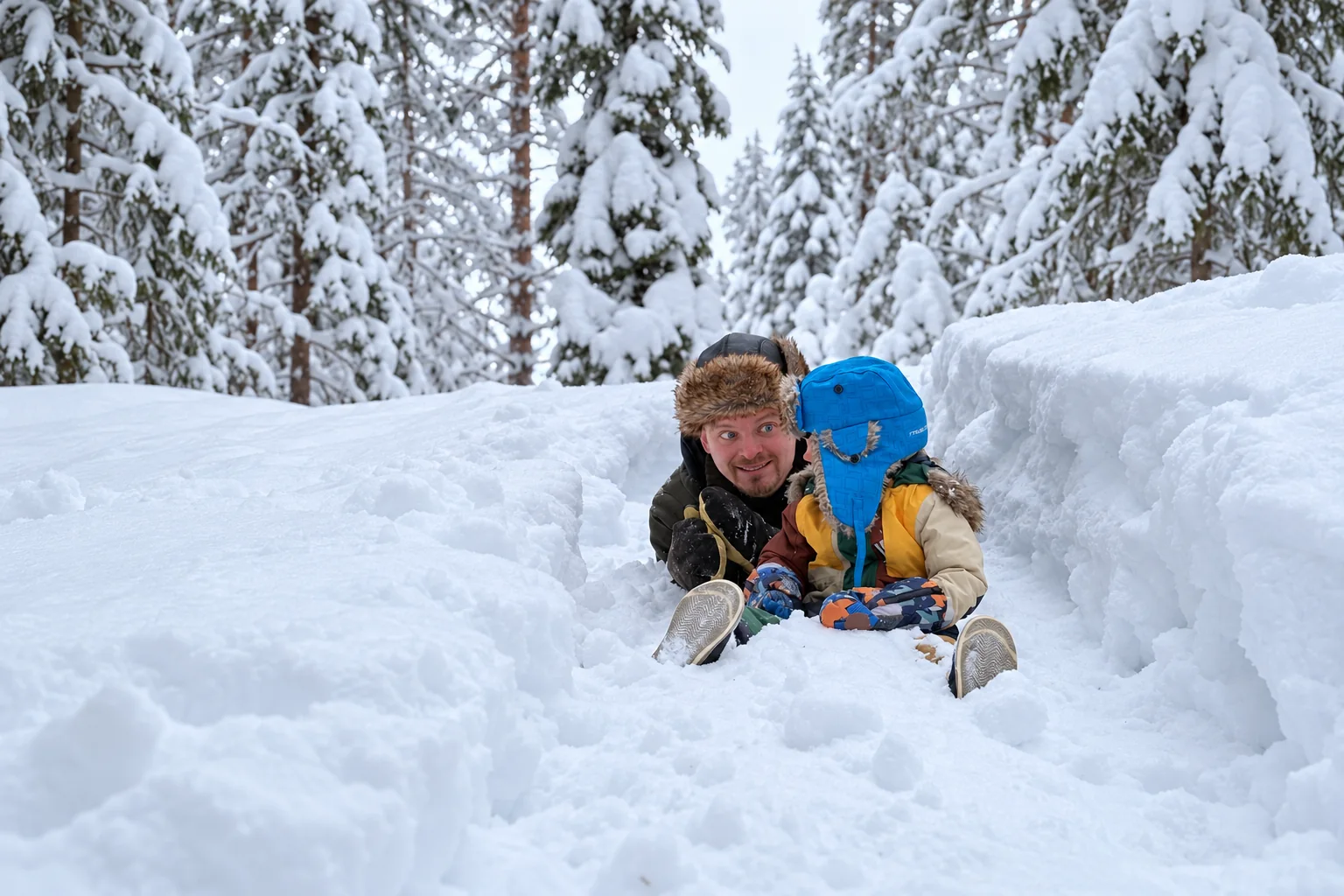
A high snowbank needs very little planning. Dig a tunnel, build a fort, make a sliding track or simply see who disappears deepest into the soft snow.
The practical secret is snow gaiters — or trousers with good integrated snow locks. Without them, powder has a remarkable talent for pouring into boots, sleeves and straight down the back. That first handful of icy snow can end an otherwise perfect outing surprisingly quickly.
Keep children moving, take a warm break before anyone becomes cold and change wet mittens for a dry pair. The goal is not to stay outside for a record time. Half an hour of wonderful play is better than two hours that end in tears.
Can you see northern lights during midwinter?
Yes. The days are getting longer, but midwinter evenings and nights remain dark enough for aurora watching. You still need a clear enough sky and suitable space weather.
The contrast is one of the season's gifts: sunlight and blue shadows during the day, stars and perhaps northern lights at night. Fresh snow reflects even a faint aurora, making the whole landscape appear softly green.
Do not let an app become the entire evening. If stars are visible, step away from the brightest yard lights, let your eyes adjust and look north — then remember to look overhead as well.
How should you prepare for a midwinter day?
Dress for both the temperature and the activity. Skiing produces heat; standing still at a campfire or under the northern lights requires much more insulation.
- Wear a moisture-moving base layer, airy insulation and a properly warm wind-resistant outer layer.
- Use roomy winter boots, wool socks, warm mittens and a hat that covers the ears.
- Pack dry spare mittens for children and snow gaiters for deep-snow play.
- Take a headlamp even as the days grow longer, plus a thermos and charged phone kept warm.
- Shorten the plan when the frost or wind calls for it and stay closer to warmth on the coldest days.
For detailed layering advice, read our guide: What to wear in extreme cold in Lapland
Where should you stay for a midwinter holiday?
Choose a warm base close to the outdoor activities you want — and somewhere you will be happy to return with red cheeks. Pesää Vailla has cabins in Levi, Ylläs and Muonio.
- Wildpaw Hideaway (Otsonpesä) — Levi — A spacious round-log cabin for ski days, sauna evenings and a warm fire after the slopes.
- Frostwing Hideaway (Riekonpesä) — Ylläsjärvi — A comfortable base near Ylläs for ski tracks, slopes and snow-covered forests.
- Snowtail Hideaway (Naalinpesä) — Äkäslompolo — A roomy cabin close to village services and the winter landscapes of Ylläs.
- Metsonpesä — Muonio — An off-grid wilderness cabin for experienced guests seeking deep quiet and dark skies.
Quick answers about midwinter in Lapland
When is midwinter in Finnish Lapland?
Midwinter falls roughly in the second half of January and February, after the polar-night period and before the bright spring-winter. Exact conditions vary by latitude, elevation and year.
Is midwinter the coldest time in Lapland?
Often yes. Finland's coldest period typically falls around late January, but temperatures vary greatly. A calm day and a windy day at the same temperature can feel very different.
Is snow deepest during midwinter?
Snow is already deep in January and February, but the statistically greatest snow depth in Lapland is usually measured later, around mid-March or early April.
Can you ski in Lapland during midwinter?
Yes. Cross-country skiing, downhill skiing and snowboarding are central midwinter activities. Check current track maintenance, lift operations, weather and local conditions before leaving.
Can you see northern lights after kaamos?
Yes. Midwinter has increasing daylight but still many dark hours. Northern lights also require suitable aurora activity and a sufficiently clear sky, so no sighting can be guaranteed.
Is midwinter suitable for families with children?
Yes, when the day's activities, clothing and time outdoors match the weather. Snow play, gentle slopes and short ski outings work well, with warm breaks and dry spare mittens close at hand.
Sources and live information
- Finnish Meteorological Institute: snow statistics and maximum snow depth
- Finnish Meteorological Institute: winter temperatures and daylight
- Levi: Lapland's eight seasons and real winter
- Finnish Meteorological Institute: tips for seeing northern lights
- Levi: current cross-country skiing information
- Ylläs Ski Resort: current skiing and snowboarding information